Showing posts with label Philippine Fashion Week. Show all posts
Street fix: The mix
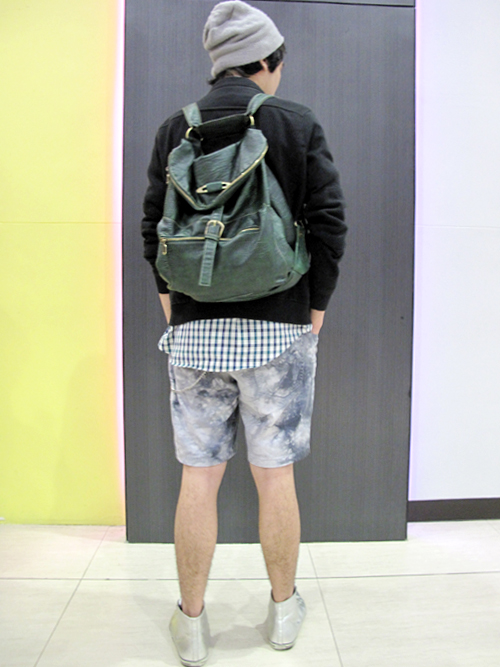
At first glance you barely notice the outfit of Maverick, a student who lined up to watch the shows at Philippine Fashion Week Holiday 2009. His style is so unassuming that, if one is not careful, he would be forgotten in the sea of fashion victims.
Fortunately, he knows how to mix patterns (marbled and checkered), match colors (silver sneakers with gray bonnet), and use key and accent pieces (his green backpack). Everything works: while his black jacket ties everything down, the gold detailing of his bag does the opposite. And to top it all off, Maverick tells me both his bag and shorts were thrifted!
The measure of true style is how one is comfortable in one's own clothes, as if they were skin. That way, separate items are almost indecipherable in the happy mix.
Manila menswear: Bang Pineda + Jerome Lorico
As of Friday, Bang Pineda and Jerome Lorico are the clear menswear favorites for Philippine Fashion Week's Holiday 2009 collections.
Though the influences of Raf Simons, Comme des Garçons, Yohji Yamamoto, and even Martin Margiela are apparent (hard to escape them!), the mix is the designers' own.
I like the half-zippered sleeves from Bang Pineda, as well as his play with lengths and silhouettes.
The marbling effect on some jeans look unique, amid all that is out in the market.
The hoodies and the twisted shawl collars are likewise commendable.
Of course, who cannot love spots? And no, I don't think it's time yet to abandon the trend.
Pineda's version reminds one of a game with red circular pieces, the name of which I cannot seem to remember at the moment.
Took these pictures from the front row. Will provide better ones once I get them from PR and complete my full menswear review.
The theme of Jerome Lorico's collection is healing. Nevermind that the sling is literal, no injuries were inflicted with the chopping off of sleeves to produce the edgy pieces a la Raf Simons.
I love the zippered bolero on the right. With the asymmetrical styling of the shorts and the leggings, suddenly the all-black outfit is interesting. It becomes a playful uniform.
Urban warriors or decommissioned soldiers?
Maybe modern day ninjas or even doctors on international peacekeeping missions?
Whatever roles can be imagined, I must say that, at least based on these two collections, things are looking up for Philippine men's fashion.
Jerome Lorico photos by Bruce Casanova of OPMB
Street fix: Andre Chang
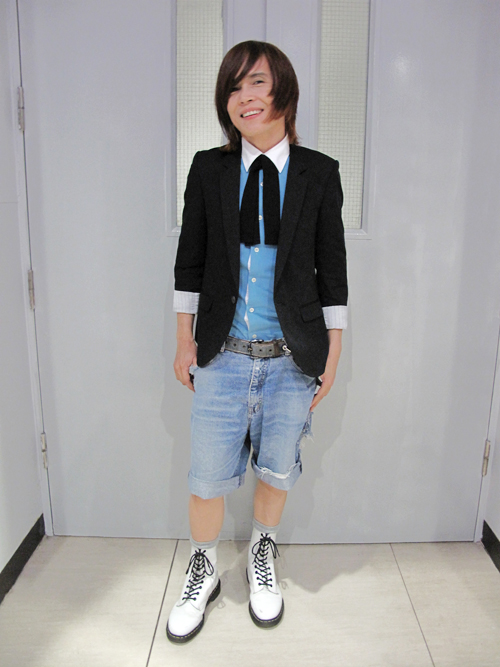
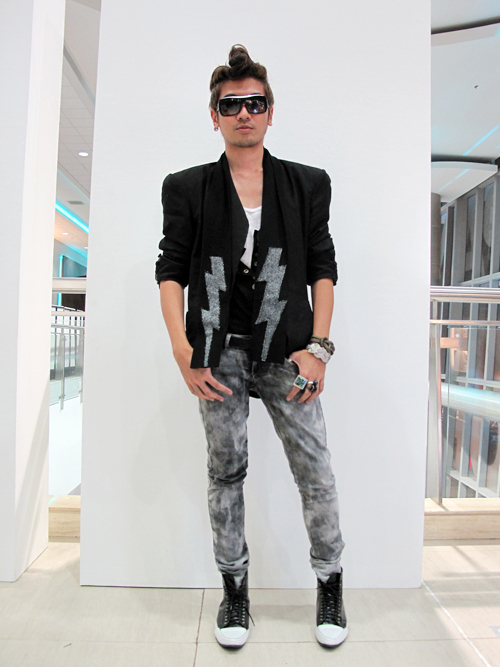
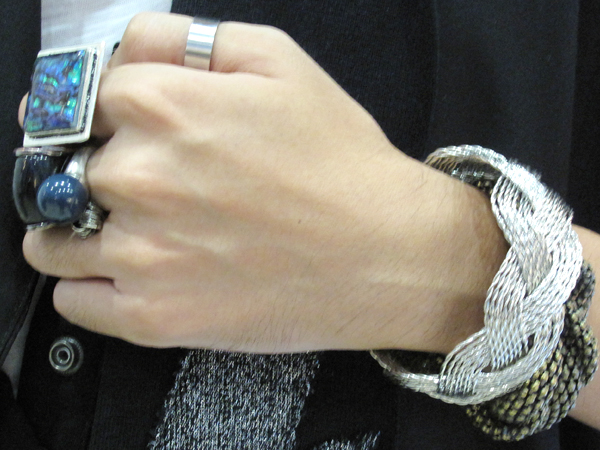
Andre Chang is a designer from Manila. He often stands out in shows and events with his ensembles, which cover a wide range of styles. Many times, he personalizes what is in trend with his own flourishes.
Philippine Fashion Week: Holiday 2009
But before the barrage of June shows for the Spring 2010 collections commence, I will be covering menswear items from the Philippine Fashion Week Holiday 2009 collections.
The photo above was from Randall Solomon's show. Missoni meets the Flintstones?
Fashion week street style photos on La Folie Douce
Full menswear review: Philippine Fashion Week Holiday 2009
There must be something new in the air this season. Before going into the menswear pieces from Philippine Fashion Week’s Holiday 2009 collections, just a few observations.
It wasn’t only me; other members of the press also noticed a heightened fashion consciousness among the crowd that gathered for the shows—mostly young people, who I suspect were not only fashion students, but dedicated enthusiasts as well. I was pleasantly surprised by the mix of edgy street kids with dandies and eccentrics. It seems as if for many of them, this season was their first official fashion excursion.
The same attitude of self-expression and experimentation seemed to have infected the menswear shows, which were variedly successful, ranging from single-piece hits to fully accomplished collections. Though the common lapses in design, such as poor construction, ill-used fabric, and a palpable lack of inspiration were still evident, a significant number of designers upped the ante with improved craft and finer finish. There were more unique and quirky ideas and enough whimsy that didn’t go overboard and could still be worked down into wearable outfits. The labels exerted stronger personality.
The most cohesive collection belonged to M Barretto, who presented notable slim-fit suit jackets that came in gray, black, and navy, with piping or with waist drawstrings.
Starting with the suits, M Barretto then proceeded to scale across a selection of men's basics sufficient to upgrade any wardrobe, while integrating modern ideas into the staples. Besides maitre d' jackets, he also had overalls, which were buckled, and drop crotch pants. Then he presented almost all the permutations possible with the cardigan and the pullover: widening collars, hems, and lapels; cutting pieces asymmetrically; pushing down v-necks; and even placing holes along collars. In the process, M Barretto paired them with superb denim and well-tailored pants.
In a word, the show was a shopper’s and retailer’s dream. Almost all the individual pieces were covetable—with an almost infinite number of combinations possible in styling them.
Another strong collection was Bang Pineda’s, which played with lengths, layers, and silhouettes. Though his pieces were not as traditional as M Barretto’s, Pineda—with his hooded ponchos, unique take on marbled jeans, shawl-collared robes, and insistence on zippers and polka dots—had a consistent vision of what was hip, fun, and alternative.
As Bang Pineda’s biker jackets and waistcoats were cropped shorter than normal, Jerome Lorico, for his part, cut his zippered vests even higher, completing all-black outfits comprised of shirts with their sleeves half ripped off, leggings, and military boots. “Healing” was his theme, hence the deconstruction and segmentation. Because of this, it may not be far off to interpret his outfits as uniforms belonging to urban warriors or soldiers decommissioned from their modern allegiances.
Besides the items from three collections, there were many scattered pieces representing what was new and fresh about this season’s menswear collections. They could roughly be categorized into three: leisure, basics, and fantasy.
On top of the list of the select leisurely items of clothing were two outfits by Gerry Katigbak. His most striking ensemble, which appeared both luxurious and period, was made up of a pair of loose white pinstriped pants paired with a black checkered and shawl collared jacket and a similarly collared loose white coat. His next outfit came in a pair of loose light gray pants, a salmon Chinese-collared shirt, and a gray jacket with giant lapels that look like sails. The effect of these two was relaxed and sophisticated.
Joining Katigbak in this category was Don Protasio, with his loose, below-the-knee drawstring shorts and tank top that looked disheveled enough to be stylish; and Zxander Tan, with his baggy black and white drawstring pants.
Updated basics then came from Anthony Nocom, with white shirts that could be worn tieless; Lyle Ibañez, with his black barong with geometric detaling as well as his well-tailored shorts and pants; Marc Tana, who presented the best cut white shirt with a Chinese collar and high side vents and very interesting single-buttoned vests and shirt-robe hybrids; and finally, Jeffrey Rogador, who made sporty jackets and coats, along with his metallic track pants.
After being informed of what pieces could easily be worked into men’s wardrobes came Estien Quijano’s woven pants in all-black or black and white. Though they looked suited more for ninjas than for anybody living in Manila, with the correct top, they could be turned into worthwhile statement pieces for nights out clubbing or simply having fun.
With all of these developments, it is easy to say that Manila menswear has come a long way. This is certainly true, and I am happy with the fact. But I am more interested to find out what these freshly empowered designers will do with menswear’s resurgence. More challenges await them.
Following suit
Text and pictures by Miguel Paolo Celestial
Additional photos by Bruce Casanova of OPMB
Published on The Philippine Star, 5 June 2009
It wasn’t only me; other members of the press also noticed a heightened fashion consciousness among the crowd that gathered for the shows—mostly young people, who I suspect were not only fashion students, but dedicated enthusiasts as well. I was pleasantly surprised by the mix of edgy street kids with dandies and eccentrics. It seems as if for many of them, this season was their first official fashion excursion.
From left: Maverick Lacson, Andre Chang, Robby Lolin
The same attitude of self-expression and experimentation seemed to have infected the menswear shows, which were variedly successful, ranging from single-piece hits to fully accomplished collections. Though the common lapses in design, such as poor construction, ill-used fabric, and a palpable lack of inspiration were still evident, a significant number of designers upped the ante with improved craft and finer finish. There were more unique and quirky ideas and enough whimsy that didn’t go overboard and could still be worked down into wearable outfits. The labels exerted stronger personality.
The most cohesive collection belonged to M Barretto, who presented notable slim-fit suit jackets that came in gray, black, and navy, with piping or with waist drawstrings.
M Barretto
Starting with the suits, M Barretto then proceeded to scale across a selection of men's basics sufficient to upgrade any wardrobe, while integrating modern ideas into the staples. Besides maitre d' jackets, he also had overalls, which were buckled, and drop crotch pants. Then he presented almost all the permutations possible with the cardigan and the pullover: widening collars, hems, and lapels; cutting pieces asymmetrically; pushing down v-necks; and even placing holes along collars. In the process, M Barretto paired them with superb denim and well-tailored pants.
In a word, the show was a shopper’s and retailer’s dream. Almost all the individual pieces were covetable—with an almost infinite number of combinations possible in styling them.
Another strong collection was Bang Pineda’s, which played with lengths, layers, and silhouettes. Though his pieces were not as traditional as M Barretto’s, Pineda—with his hooded ponchos, unique take on marbled jeans, shawl-collared robes, and insistence on zippers and polka dots—had a consistent vision of what was hip, fun, and alternative.
As Bang Pineda’s biker jackets and waistcoats were cropped shorter than normal, Jerome Lorico, for his part, cut his zippered vests even higher, completing all-black outfits comprised of shirts with their sleeves half ripped off, leggings, and military boots. “Healing” was his theme, hence the deconstruction and segmentation. Because of this, it may not be far off to interpret his outfits as uniforms belonging to urban warriors or soldiers decommissioned from their modern allegiances.
Besides the items from three collections, there were many scattered pieces representing what was new and fresh about this season’s menswear collections. They could roughly be categorized into three: leisure, basics, and fantasy.
On top of the list of the select leisurely items of clothing were two outfits by Gerry Katigbak. His most striking ensemble, which appeared both luxurious and period, was made up of a pair of loose white pinstriped pants paired with a black checkered and shawl collared jacket and a similarly collared loose white coat. His next outfit came in a pair of loose light gray pants, a salmon Chinese-collared shirt, and a gray jacket with giant lapels that look like sails. The effect of these two was relaxed and sophisticated.
Lyle Ibañez
Joining Katigbak in this category was Don Protasio, with his loose, below-the-knee drawstring shorts and tank top that looked disheveled enough to be stylish; and Zxander Tan, with his baggy black and white drawstring pants.
Updated basics then came from Anthony Nocom, with white shirts that could be worn tieless; Lyle Ibañez, with his black barong with geometric detaling as well as his well-tailored shorts and pants; Marc Tana, who presented the best cut white shirt with a Chinese collar and high side vents and very interesting single-buttoned vests and shirt-robe hybrids; and finally, Jeffrey Rogador, who made sporty jackets and coats, along with his metallic track pants.
After being informed of what pieces could easily be worked into men’s wardrobes came Estien Quijano’s woven pants in all-black or black and white. Though they looked suited more for ninjas than for anybody living in Manila, with the correct top, they could be turned into worthwhile statement pieces for nights out clubbing or simply having fun.
With all of these developments, it is easy to say that Manila menswear has come a long way. This is certainly true, and I am happy with the fact. But I am more interested to find out what these freshly empowered designers will do with menswear’s resurgence. More challenges await them.
Following suit
Text and pictures by Miguel Paolo Celestial
Additional photos by Bruce Casanova of OPMB
Published on The Philippine Star, 5 June 2009
Navy blazer with striped lining
This is how my thrifted blazer fits.
Was busy taking pictures and wasn't able to document my own outfits for the shows. So thanks to Ziggy Savella, a designer at Philippine Fashion Week, for the snap!
Tee, Public Enemy; jeans, Bench; Rabeanco bag and navy blazer: both thrifted; filigree belt, Brave Beltworks; laceups, Marlboro Classics
Phil. Fashion Week S/S 2009: menswear

I'd wear these jeans by Pier Lim.

The combination of denim and cotton is reminiscent of Martin Margiela's artisanal trousers attached with belt strips taken from vintage jeans (2004 Spring/Summer and Fall/Winter).
Read the rest of my review here
Manila menswear: M Barretto's essentials
Saturday saw a strong collection from designer M Barretto. Most notable were his slim-fit suit jackets that came in gray, black, and navy, with piping or with waist drawstrings. He also had maitre d's. Notice how this one was freshly paired with drop-crotch pants.
The suits were just the beginning. Starting there, M Barretto scaled across a selection of men's basics sufficient to upgrade any wardrobe. Of course, he added his own finishes. Take the overalls on the right, for instance, which had buckles for the front pockets and another pocket beneath one armpit.
M Barretto then presented almost all the permutations possible with the cardigan and the pullover. He widened collars, hems, and lapels. He cut pieces asymmetrically.
While in the process pairing them with superb denim and well-tailored pants.
The show was a retail frenzy, with almost all the pieces independently covetable.
I suppose by now, you could guess the color theme for M Barretto's collection. There was just one range used, besides navy, against all the blacks, whites, and grays.
The show made me suddenly think of all the items my cabinet was missing.
There were so many that it may take me quite a while just to decide which ones I want and which ones I need. Then again, with M Barretto's collection, I'm not sure there's a difference.
Jerome Lorico's easy complementary pieces

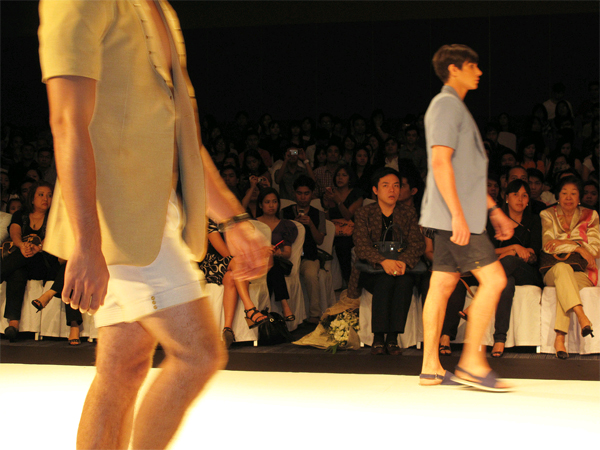
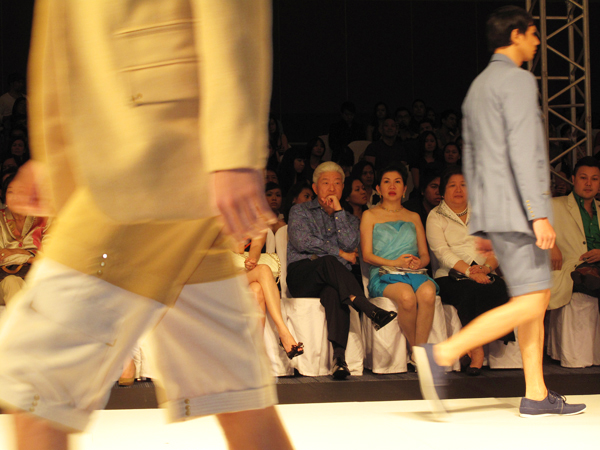
I have just been going through the official PR photos from last week's Manila fashion shows. Although they are keen to show the public exactly what the clothes look like, somehow the romance and feel of the pieces don't show. So for this season, I am glad to say that I am fairly satisfied with how my own photos from the front row turned out.
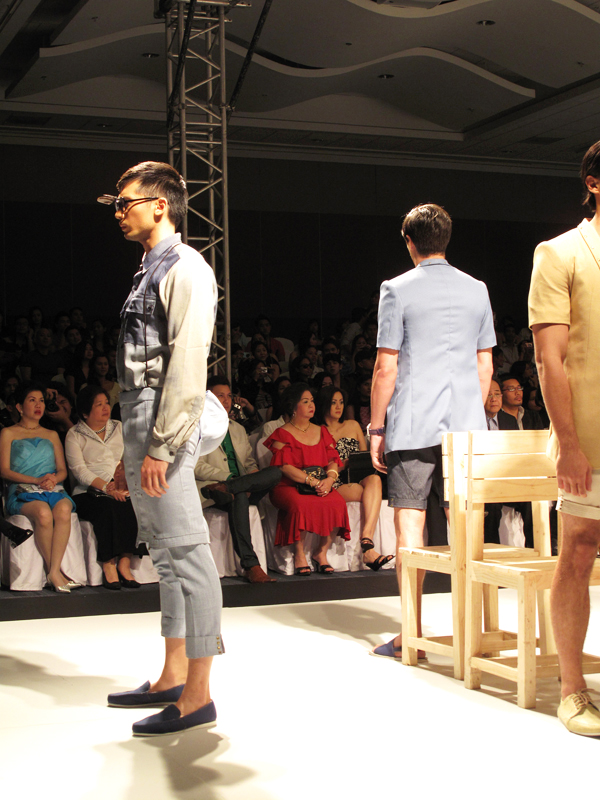
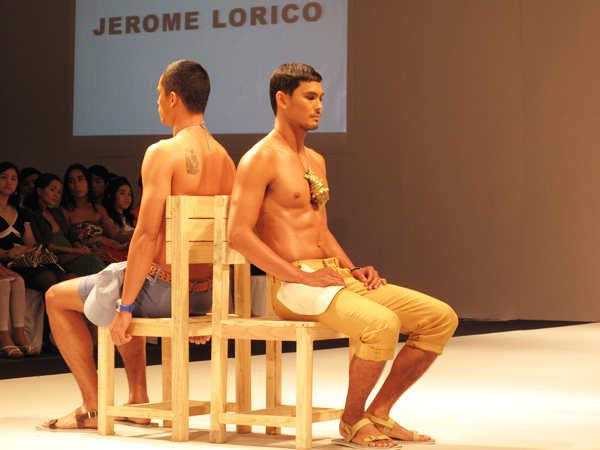
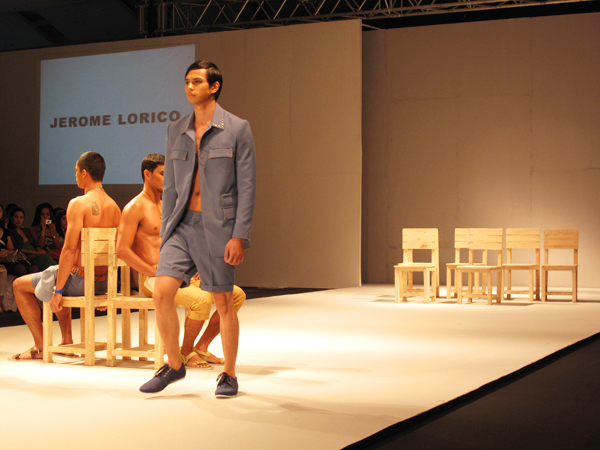
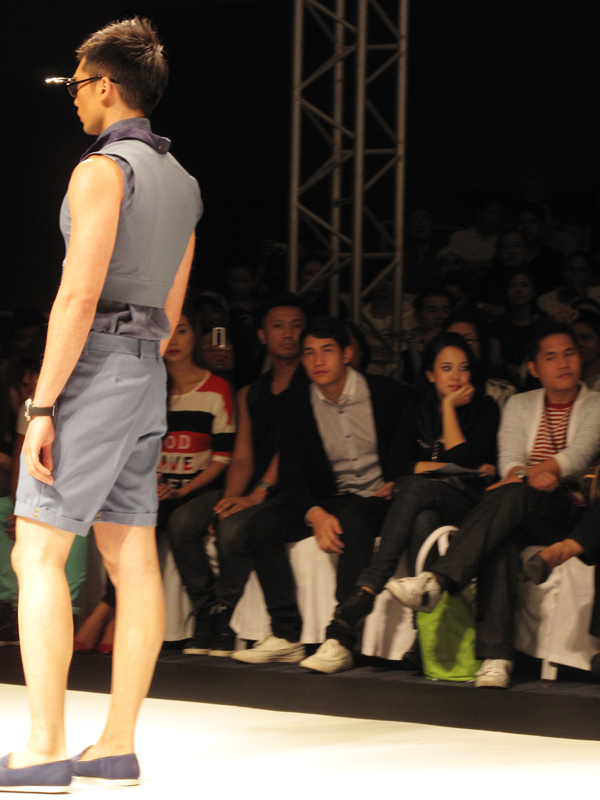
I feel that among the shows, Jerome Lorico's was the most cohesive — in the way that he presented an idea and brought it to its completion. Of course you can say that the simpler the idea is, the easier it is to execute. But as it happens, simplicity is not as simple to achieve.
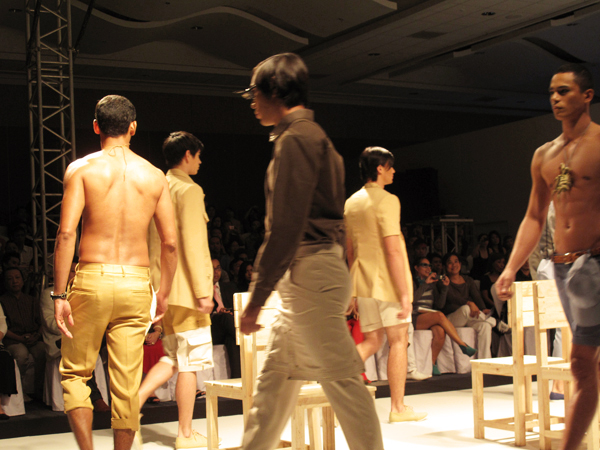
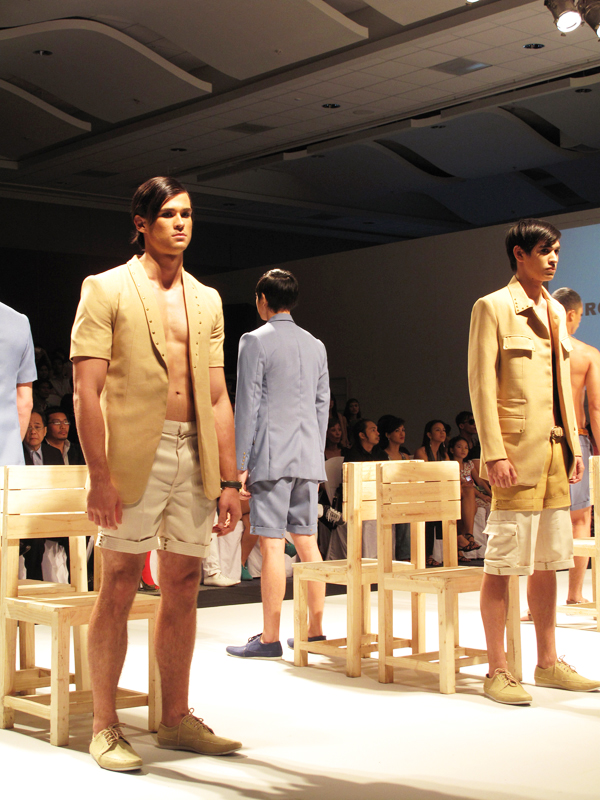
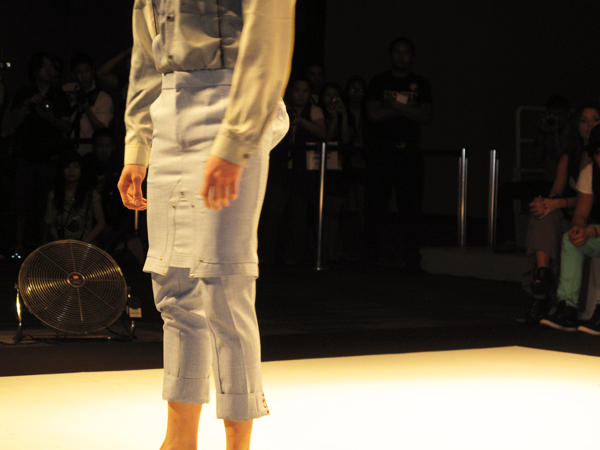
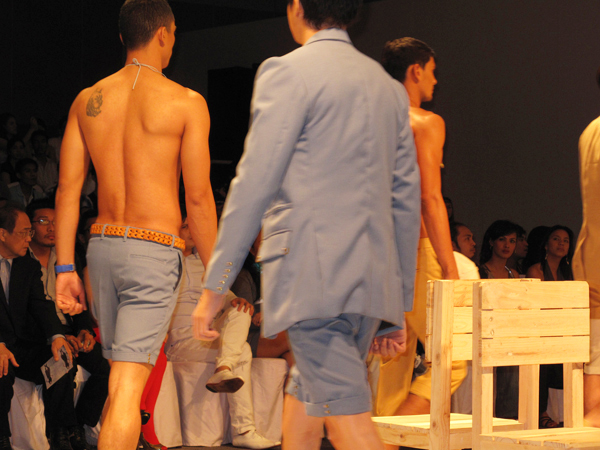
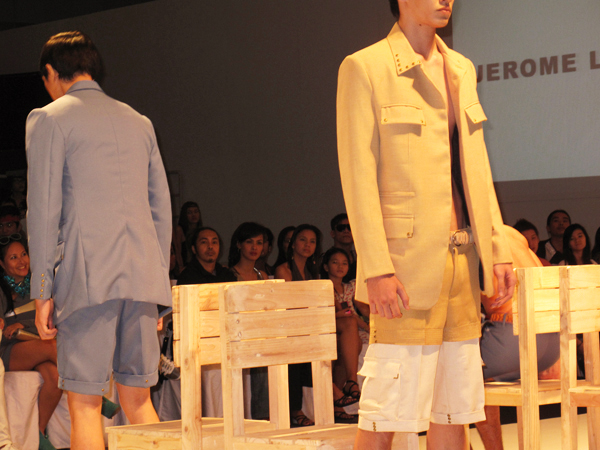
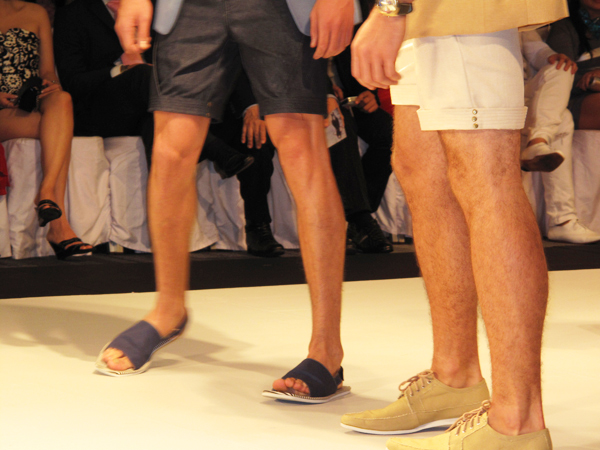
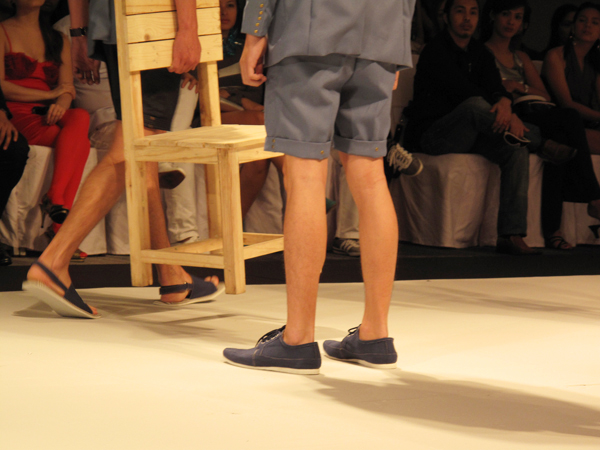
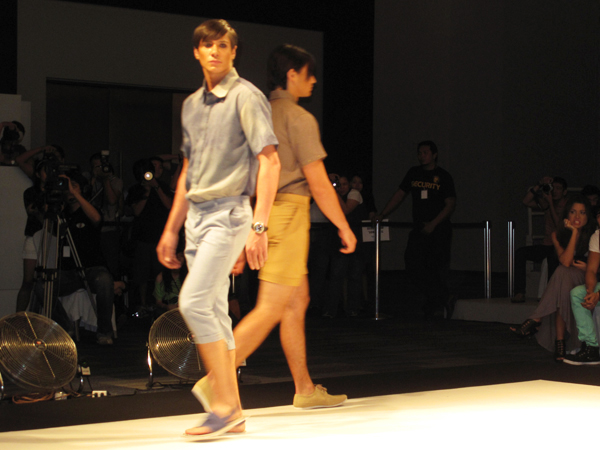
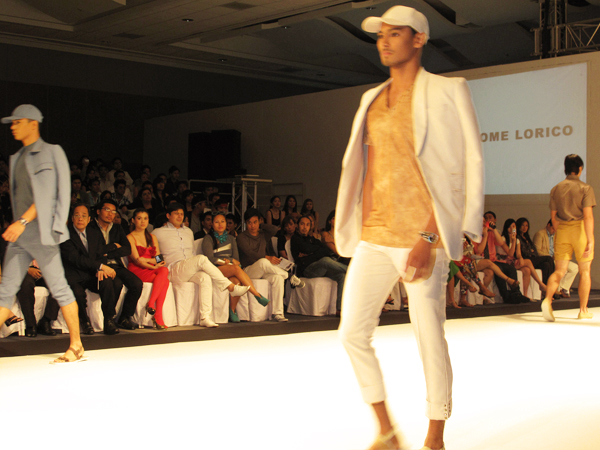
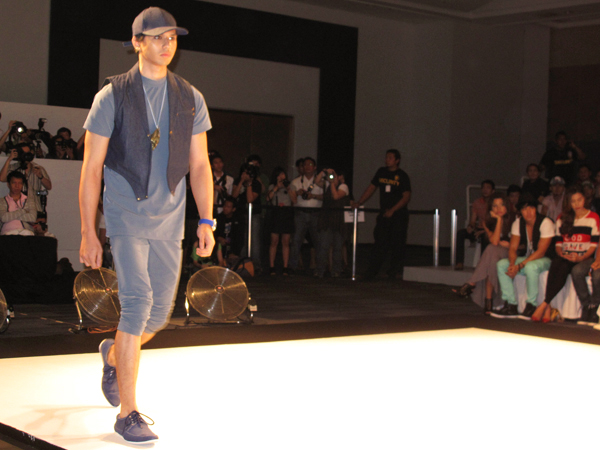
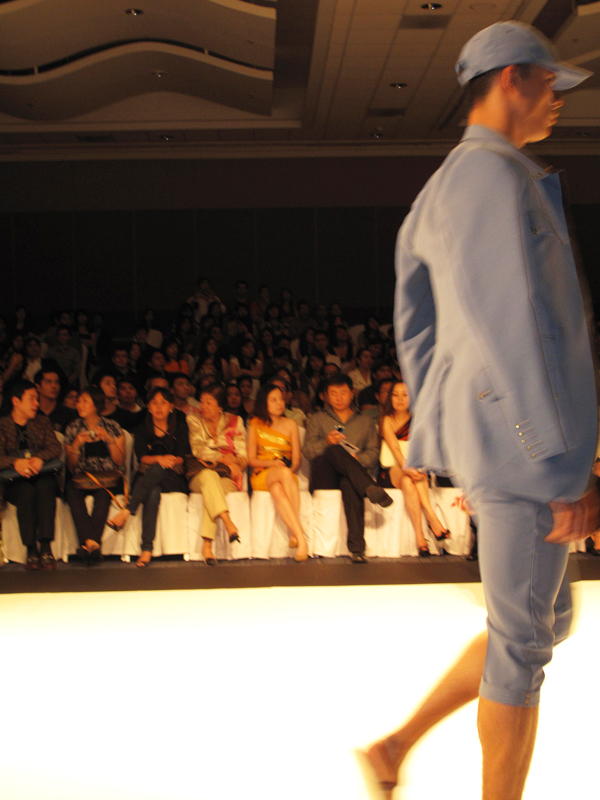
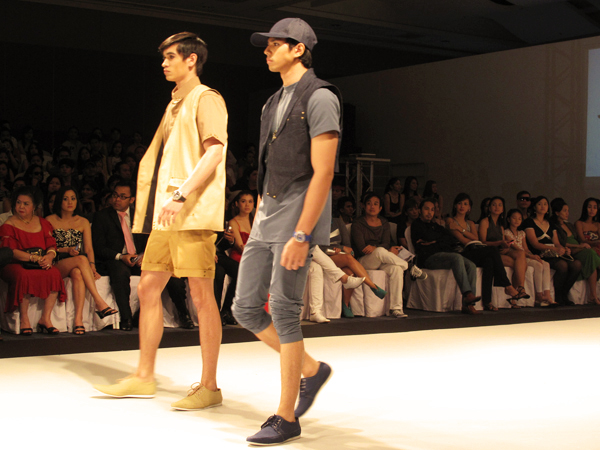
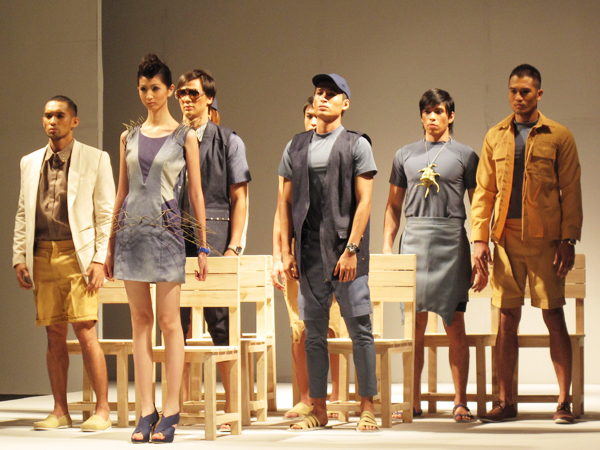
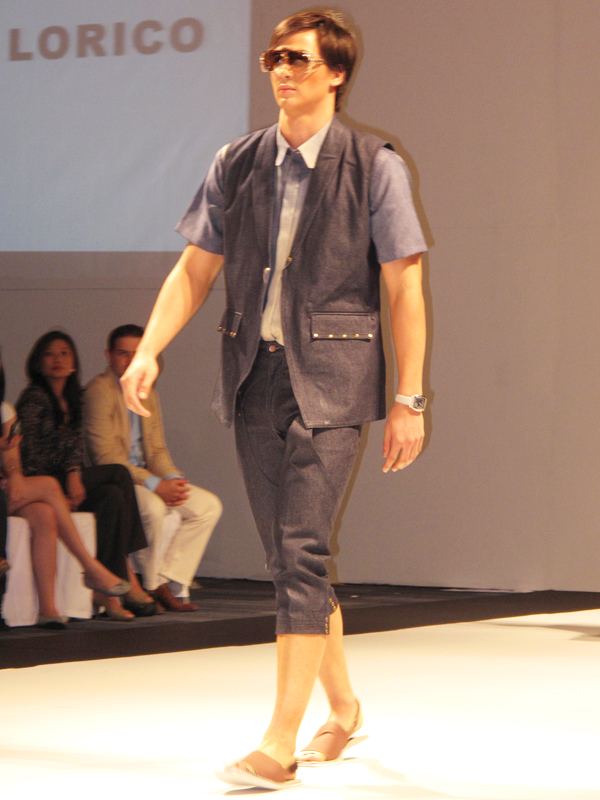
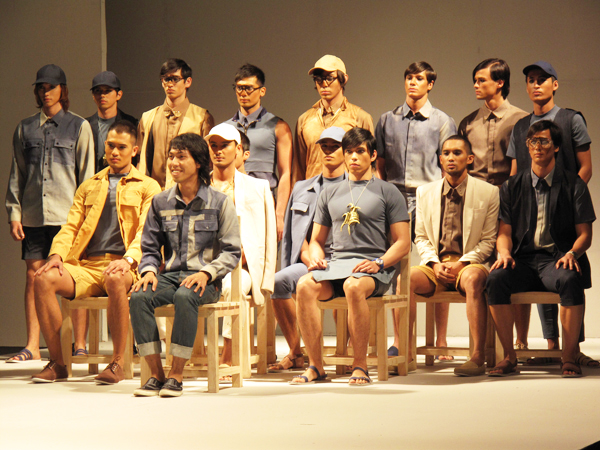
Needless to say, Jerome's entire collection is in varying shades of blue and beige, but it is the treatment of the fabric and the details that raise the twin monochromatic theme.

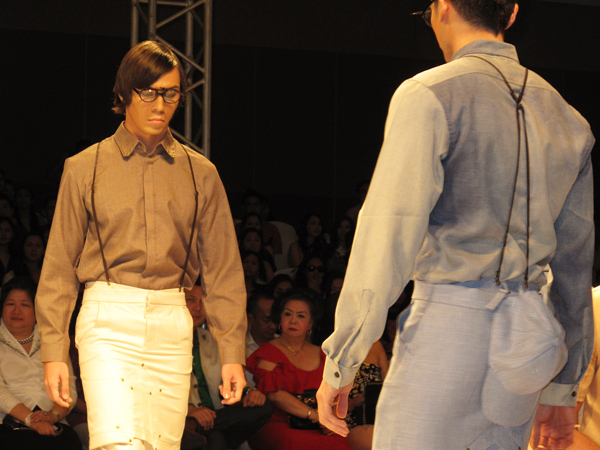
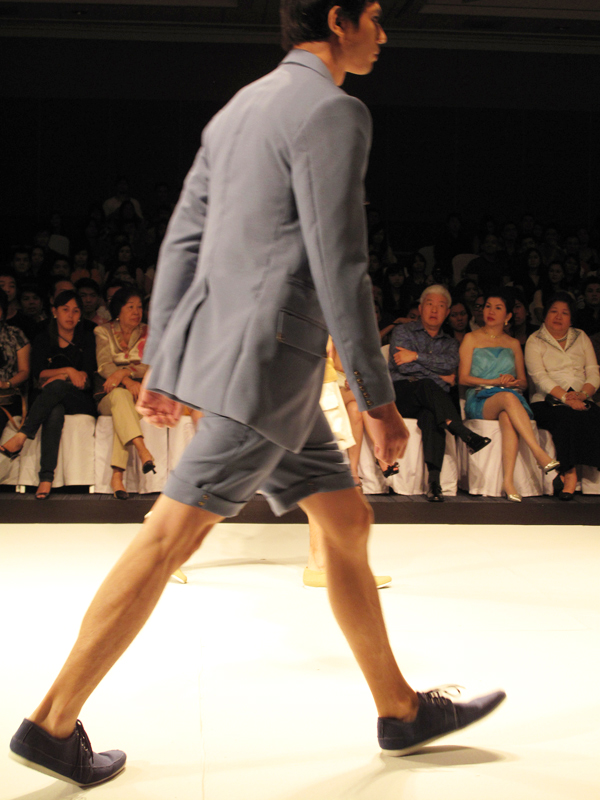
Notice that the shorts-on-pants idea has been modified into a semi-jumper/apron-on-pants concept. The jackets are slim fitted, with a slight shoulder pagoda (Or is this just the result of big arms?).

Rivets are used all around — from collars and hems to sleeves and pocket details.

I like the styling.

I like the linens.

The braided belt is a nice touch.

Though the fit and cut may not survive closer inspection.

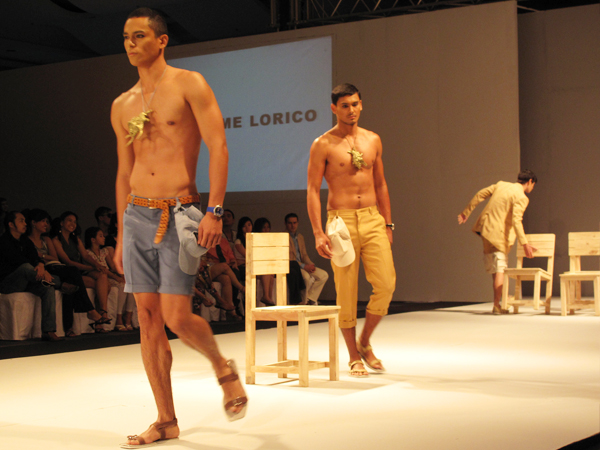
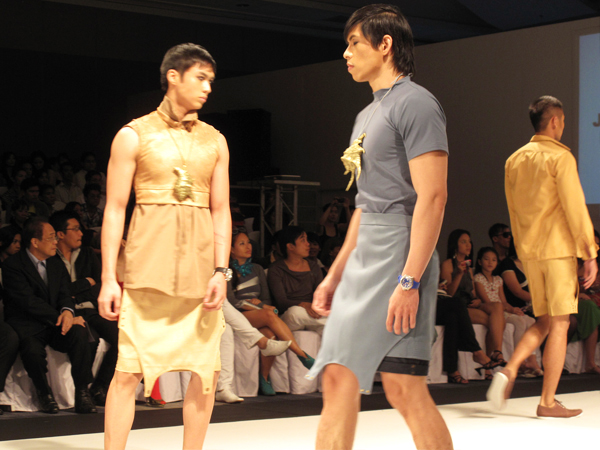
The use of the conch shell as accent is good, as it informs the audience of the range of settings the outfits can be worn in.

They move well.

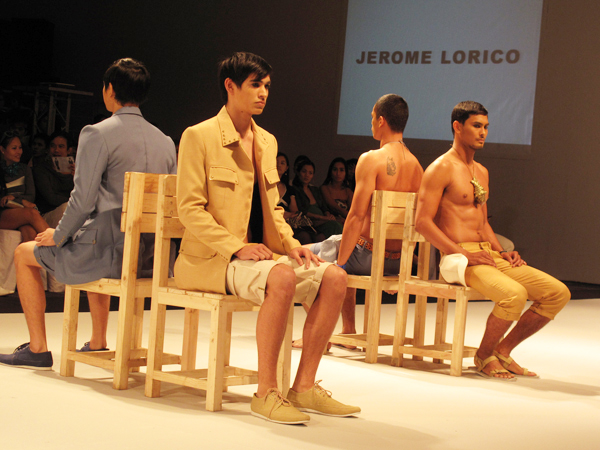
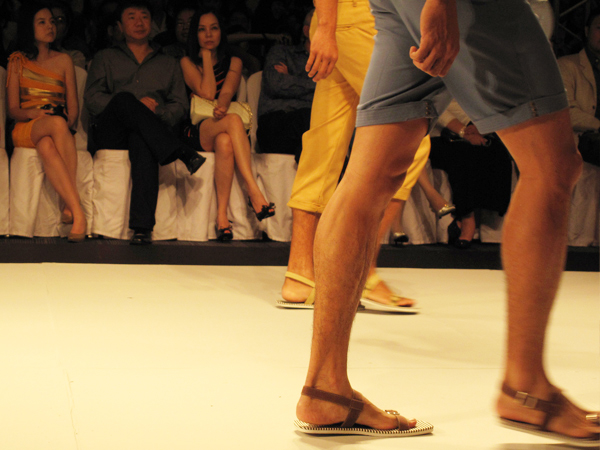
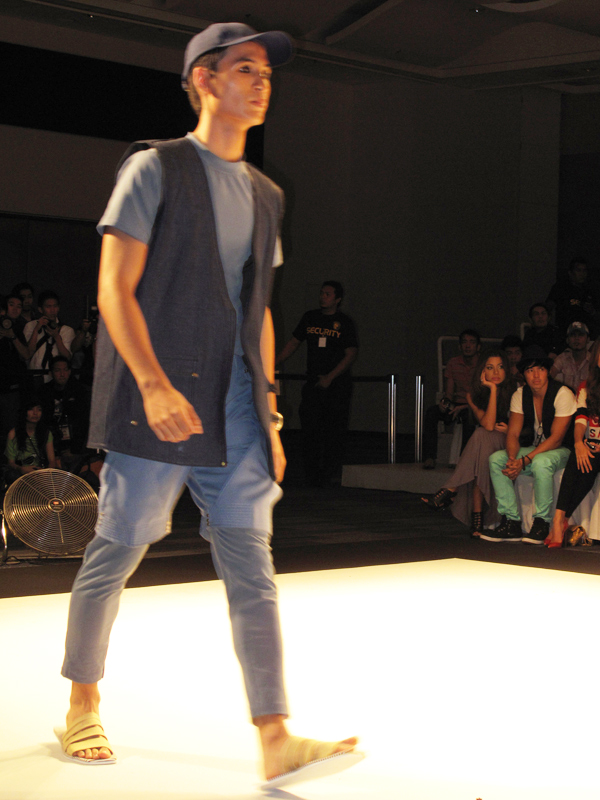
The shoes and sandals are remarkable — designed by Bang Pineda for local shoe label Cardams.

They embody youth and summer, and offer a flexible array.

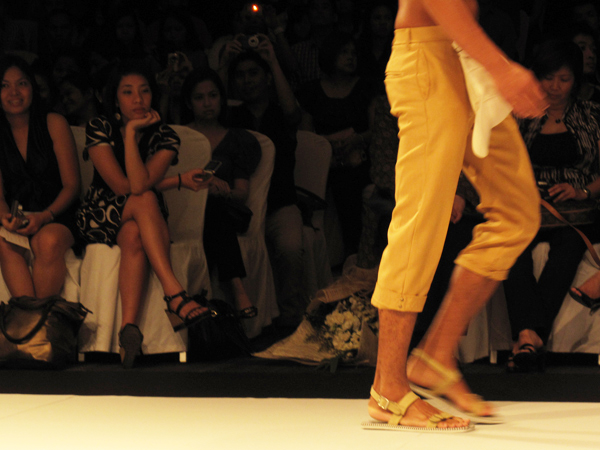
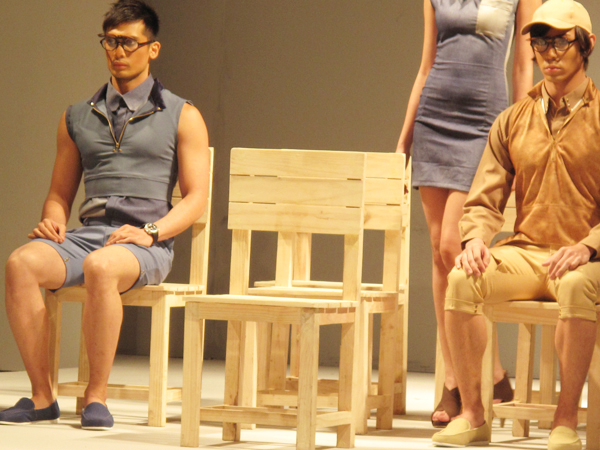
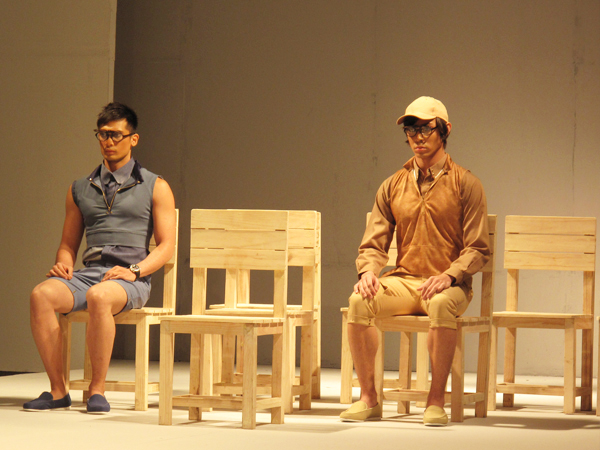
The idea of shifting configurations of wooden chairs also aids the show well — they suggest not just the classroom, but also outdoor locations. The arrangement shifts as one imagines different places.


I honestly think I have a better vantage point than the photographers in front of the runway, who cannot see this.


It is also interesting to document the reaction of the audience.

What do you think of the midriff vest? Isn't it a good half-sporty/half-casual alternative? I also like the two-tone, sleeveless shirt — no matter how the pair resembles the sleevless outfits in the latest Prada offering.

The striped soles of the sandals make them suitable not just for the beach, but also for drawstring pants weekends.


The bunching up of shirts is apparently everybody's problem.

The blue linen shirt is dyed to resemble denim. Isn't that wonderful?

Though I can't say the same for the tan version. But nevermind, the shawl collared jacket more than makes up for it.

The cut of this vest makes me look at it twice, but it seems as if there's something wrong with this outfit's proportions.

The exact hue of blue is riveting.


Again, the proportions — the hem of the long vest is too near to the hem of the shorts. Though I appreciate the partnering of yellow and blue.

No shorts this time. Time for lunch!

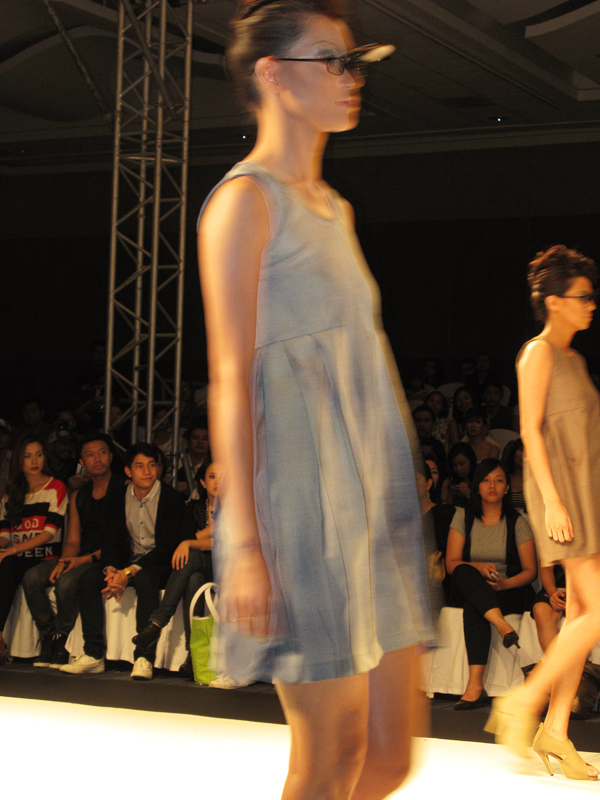
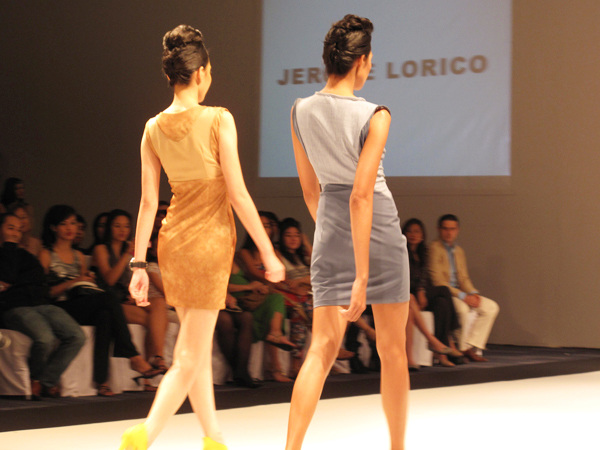
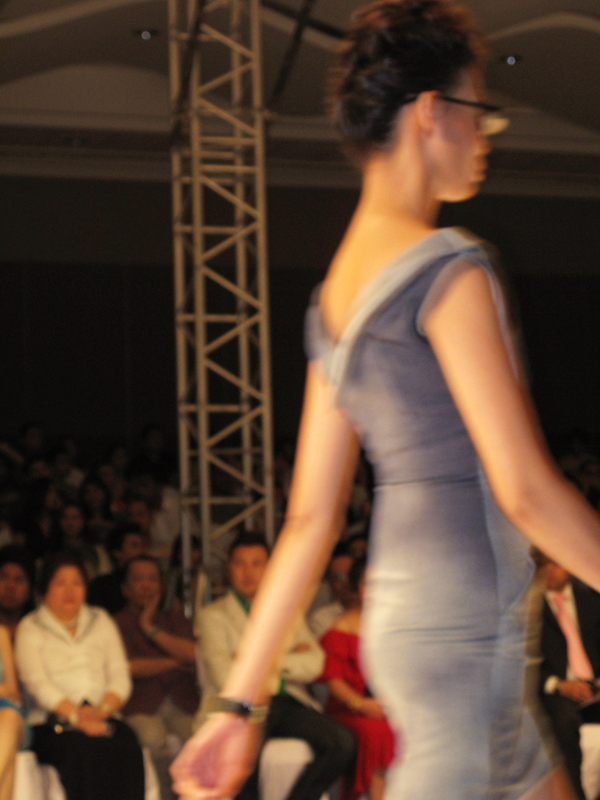
Lorico is better with menswear, but his "denim" pieces for women are not at all bad.

The shoulders have it.

Dyeing that simulates powder.

The class is now ended. Please stand up,students.

Take off your shades, young boy. Let me tell you that at least for this ensemble, the lengths of the vest and pants are perfectly coordinated. Nice sandals too.

Of course, the designer gets to wear the best shirt in his collection, though the leftmost guy doth protest.
Subscribe to:
Posts (Atom)